A month on from its last night, the 2026 Rock in Rio can be summed up in two announcements made a day apart. On Sunday 13 September the organisers presented their closing numbers and confirmed a return in 2028. On Monday 14 September Heineken said it would no longer be the festival's official sponsor. Taken together they describe the model more precisely than any line-up poster: Rock in Rio is a concert series and a brand platform in roughly equal parts, and 2026 showed both the strength and the exposure of that.
Seven days, one dry
The festival ran on 4, 5, 6 and 7 September and again on 11, 12 and 13 September at the Parque Olímpico, with a full ticket priced at R$ 870 and the half-price ticket at R$ 435, Hoje em Dia reported when the programme was published at the end of May. The Palco Mundo headliners, in order, were Foo Fighters, Avenged Sevenfold, Calvin Harris, Elton John, Stray Kids, Maroon 5 and Twenty One Pilots.
It rained on six of the seven days. The only dry one was the opening day, according to Estadão Conteúdo's closing report, carried by O Liberal. Diário do Rio, citing Alerta Rio data, wrote that rainfall in the first ten days of September had already exceeded the amount expected for the whole month.
Roberta Medina, the festival's vice-president, chose to make a joke of it at the closing press conference. "A chuva foi um dos nossos artistas este ano," she said: the rain was one of our artists this year (our translation, as are the quotes below). Asked about the standing water across the Cidade do Rock, she answered with what the agency reads as a reference to the first edition in 1985: "Há 40 anos as poças eram de lama, eu acho que a poça de água tá tudo bem." Forty years ago the puddles were mud; I think a puddle of water is fine. Her more interesting claim, reported by the same agency, was that fans afraid of soaking their phones put them away and engaged more with the shows.
The numbers, and whose they are
Every figure from the closing press conference comes from the organisation, and none of the reports reviewed for this piece cites an independent study. The balance as presented:
- about 700,000 people over seven days, or roughly 100,000 a day, according to Times Brasil;
- 49% of the audience from outside the state of Rio de Janeiro, and visitors from 89 countries;
- an economic impact of R$ 3.36 billion and 33,900 direct and indirect jobs, with about 30,000 people accredited to work on site, as reported by Diário do Rio;
- about 300,000 passengers on the BRT Expresso, about 240,000 metro boardings linked to the festival and about 150,000 people on the BRT Primeira Classe service, per Times Brasil.
The out-of-state share is the figure that matters for the circuit. A festival where half the audience travels is a tourism product, and it is sold and sponsored as one.
On stage, the edition's two talking points were generational opposites. Elton John shared the Palco Mundo bill with Gilberto Gil on the fourth day. And on Friday 11 September Stray Kids became the first K-pop act to headline that stage, with Nexz and Hwasa on the same bill. Medina said she would work to bring the genre back in 2028, Estadão reported.
Half the revenue wears a logo
Three days before the festival closed, Mercado & Consumo published an Estadão Conteúdo report on the commercial side. Ninety brands signed on as sponsors or supporters, the most since the festival began in 1985. Sponsorship values rose 20% on the 2024 edition, according to Rodolfo Medina, the festival's vice-president for partnerships and marketing, who did not disclose amounts. And revenue is split approximately in half: about 50% from ticket sales and about 50% from sponsorship.
That ratio is the key to reading the festival. A promoter whose income is half sponsorship is selling seven days of guaranteed attention as much as seven concerts, and Rodolfo Medina said as much: "A experiência ao vivo cada vez mais faz parte do mix de entrega das marcas." Live experience is increasingly part of the brands' delivery mix.
It also explains why the Monday announcement stung. Heineken had been a partner since 2011 and expected to pour 700,000 litres of draft beer at this edition, according to the same report. On 14 September, Times Brasil reported, the brewer announced the end of its run as official sponsor. Cecilia Bottai, its vice-president of marketing, described the decision as part of a strategic shift towards proprietary experiences and customised projects. The group is not leaving the promoter altogether: it remains associated with Rock World, the company behind the festival, and its Eisenbahn brand is confirmed as a sponsor of The Town in São Paulo in 2027.
A sponsor with 15 years of history decided it could reach the same audience on its own terms, at the end of an edition that set a record for brand count. Scale did not prevent the exit.
What to watch
- The beer category for 2028. No replacement for Heineken appears in the coverage reviewed. Whoever takes it, and at what level, is the first test of the 20% rise in sponsorship values.
- 4, 5, 6, 11 and 12 September 2027. The Town in São Paulo, the dates Rock World restated at the closing press conference.
- September 2028. The next Rock in Rio. The festival's site carries the month and year; the exact days have not been set. A street race finishing inside the Cidade do Rock on the test-event day is the announced novelty.
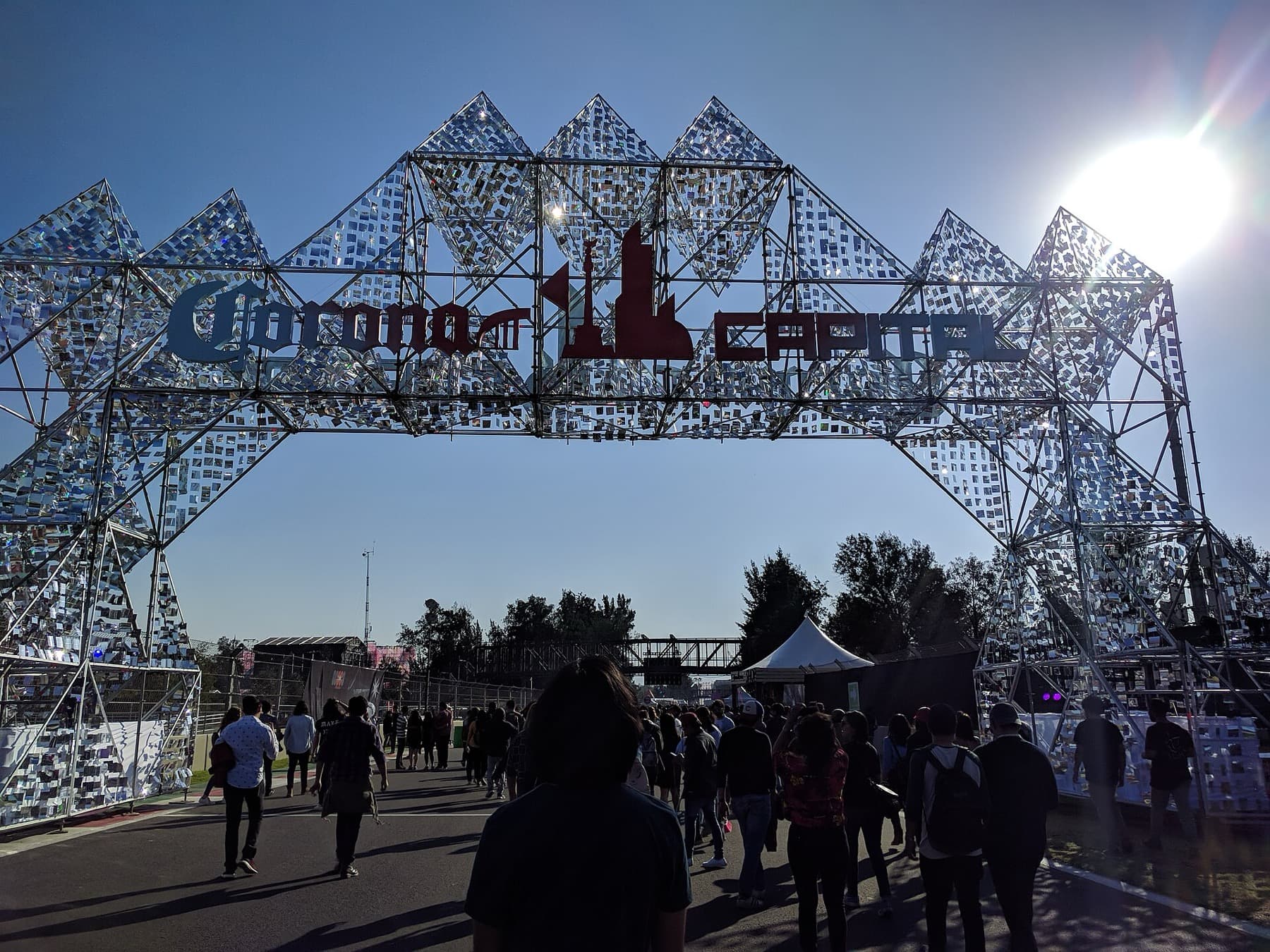
- 21 November 2026. Twenty One Pilots, who closed the final night in Rio, headline the Saturday of Corona Capital in Mexico City, according to Chilango.
Sources: Hoje em Dia (dates, venue, Palco Mundo line-up, prices); Estadão Conteúdo via O Liberal (closing press conference, quotes, 2028); Diário do Rio (economic figures, rainfall); Times Brasil (attendance, origin, transport) and Times Brasil (Heineken); Estadão Conteúdo via Mercado & Consumo (sponsorship); Rock in Rio (2028); Chilango (Corona Capital). Quotes translated from Portuguese by Music to See.